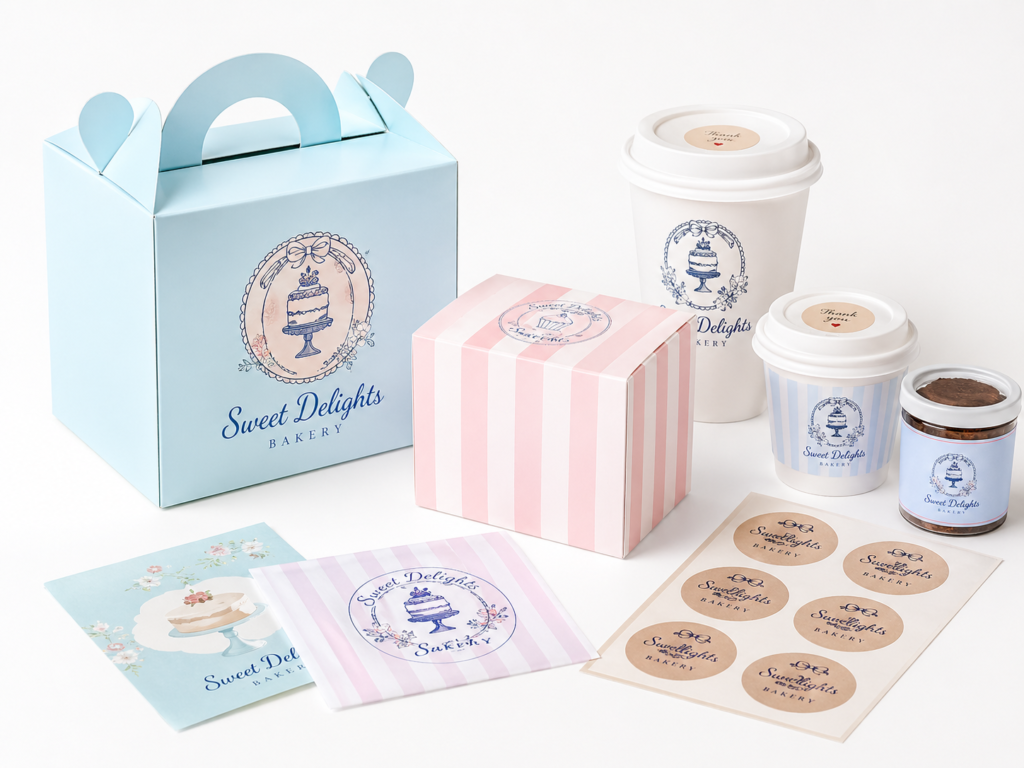
Bakery Packaging on a Budget: Looking Premium Without the Premium Price

Last Updated: May 2026 | Reading Time: 12 minutes

Introduction: The Packaging Paradox Every Bakery Faces

You bake world-class sourdough. Your macarons are Instagram-perfect. Your cinnamon rolls sell out by 9 AM. But when customers walk away with your products, they’re carrying them in plain white boxes that look like they came from a discount office supply store.
Here’s the painful truth: your packaging is sending a message before your product gets a chance to. In an era where unboxing videos generate millions of views and customers judge brands in three seconds, “good enough” packaging is silently eroding your pricing power and brand perception.
But let’s address the elephant in the kitchen. Premium custom packaging feels expensive. When you’re running a home bakery, a small storefront, or scaling a DTC cookie brand, the quotes from traditional packaging suppliers can be shocking. Rigid boxes with foil stamping? Minimum orders of 5,000 units. Custom molded inserts? Tooling costs that could buy a new commercial oven. For many bakery owners, the math simply doesn’t work.
After working with hundreds of bakery owners across five continents—from Instagram baking influencers in California to third-generation family bakeries in Portugal—we’ve developed a systematic approach to premium perception at pragmatic prices. This isn’t about cutting corners. It’s about understanding where money actually buys perceived value, and where clever design, material psychology, and strategic sourcing can deliver luxury aesthetics at a fraction of traditional costs.
In this guide, you’ll learn seven battle-tested strategies, see real cost-per-unit breakdowns, and understand exactly how to make $0.85 packaging look like it cost $4.00. No fluff. Just actionable frameworks you can implement this quarter.

Why Premium Packaging Is Non-Negotiable in 2026

Before we dive into budget tactics, let’s establish why this matters financially. The packaging industry has shifted dramatically, and consumer expectations have evolved beyond simple product protection.

Why Premium Packaging Is Non-Negotiable in 2026

MetricImpact on Bakery Businesses
72% of consumers say packaging design influences their purchase decisionPoor packaging directly costs you sales before the first bite
40% of consumers share product images on social media when packaging is “gift-worthy”Free UGC marketing from customers
52% of online shoppers say they would purchase again from a brand with premium packagingPackaging drives retention, not just acquisition
61% of Gen Z buyers actively judge a brand’s “aesthetic” by its packagingCritical for reaching younger demographics
Average unboxing video on TikTok/YouTube generates 3x the engagement of standard product reviewsOrganic algorithmic reach
Sources: Dotcom Distribution Packaging Report 2025; McKinsey Consumer Sentiment Survey; internal analysis of 200+ bakery clients
What this means practically: packaging isn’t a cost center. It’s a marketing asset with measurable ROI. When a customer pays $28 for a dozen decorated cookies, they’re not just buying flour and sugar. They’re buying the anticipation, the presentation, and the story. Your packaging is the physical container of that story.
For budget-conscious bakeries, the goal isn’t to compete with Tiffany & Co. It’s to create strategic moments of delight that justify premium pricing and trigger organic sharing.

The Real Cost Breakdown: Where Most Bakeries Bleed Money

Understanding where traditional packaging budgets collapse is the first step toward fixing them. After auditing packaging spend for over 150 bakery clients, we’ve identified three primary budget traps.

The Three Budget Killers

1. Over-Engineering the Primary Container

Many bakeries immediately jump to fully custom-printed rigid boxes. While beautiful, these typically require 3,000–5,000 unit minimums and cost $2.50–$6.00 per unit depending on size and print complexity. For a bakery selling 200 units weekly, that’s 25 weeks of inventory and $15,000+ tied up in boxes.

2. Ignoring the "Layering Principle"

Premium packaging isn’t one thing—it’s a sequence of reveals. Bakeries often spend heavily on the exterior box while neglecting interior touches (tissue paper, stickers, thank-you cards) that actually create the emotional peak of the unboxing experience. This is backwards.

3. Ordering Everything from Different Suppliers

When your boxes come from a packaging wholesaler, your labels from a print shop, your ribbons from Amazon, and your tissue paper from a craft store, you lose volume discounts, color consistency, and design cohesion. The hidden cost of fragmentation is massive.

Standard vs. Smart Budget Allocation

Cost CategoryTraditional Approach (% of budget)Smart Budget Approach (% of budget)Result
Exterior Box/Container60%35%Shift to clean, neutral base
Interior Experience (tissue, stickers, cards)15%40%Where emotional value lives
Branded Merch/Extras (mugs, aprons)5%15%High-perceived-value gifts
Shipping/Logistics20%10%Streamlined supplier consolidation

7 Budget-Friendly Strategies That Look Expensive

Strategy 1: The Sticker & Label Revolution (Cost: $0.08–$0.25/unit)

Custom stickers and labels are the single most underrated tool in budget bakery packaging. Modern digital printing allows for small-batch production (as low as 100 units) with foil accents, holographic finishes, and textured stocks that feel luxurious.
The Psychology: A plain kraft box with a perfectly placed, high-quality sticker feels intentional and artisanal. A generic printed box feels mass-produced. The human brain interprets the sticker as a “personal touch” rather than a cost-saving measure.
Execution Framework:
  • Use clear vinyl labels on solid-color boxes for a “printed” look at 1/4 the cost
  • Add foil-accented thank-you stickers to seal tissue paper—this creates a “wax seal” effect
  • Apply QR code labels linking to your Instagram or a “behind the scenes” video—adds tech-forward perception at zero material cost
  • Invest in one die-cut logo sticker shape used consistently across all packaging touchpoints
Real Numbers: A 3″ custom foil sticker costs approximately $0.12 when ordered in batches of 500. Compare that to custom foil stamping on a box, which requires a $400+ die plate plus $1.50+ per unit.

Strategy 2: Tissue Paper & Belly Bands as Hero Elements (Cost: $0.15–$0.40/unit)

If you do nothing else from this article, implement this strategy. Tissue paper and belly bands (paper strips wrapped around boxes) deliver disproportionate visual impact because they sit at the moment of reveal.
The Layering Technique:
  1. Exterior: Plain, high-quality kraft or white box (bulk purchased, $0.35–$0.60)
  2. Reveal Layer: Custom-printed tissue paper in your brand color ($0.08–$0.15 per sheet)
  3. Anchor Layer: Printed belly band with your logo, tagline, and social handle ($0.05–$0.12)
  4. Final Touch: Branded sticker sealing the belly band ($0.08)
This four-layer system costs $0.56–$0.95 total but creates a sensory experience that customers describe as “like opening a gift.” The belly band serves as your billboard—it carries your brand story without requiring full-box printing.
Pro Tip: Order tissue paper in bulk from packaging specialists rather than retail craft stores. A 480-sheet pack of custom tissue costs roughly $120–$180 ($0.25–$0.38/sheet) compared to $1.00+ per sheet at consumer retailers.

Strategy 3: Minimalist Design as a Premium Signal (Cost: Design time, $0 material impact)

Counterintuitive insight: the less you print, the more expensive it looks.
Luxury brands—from Aesop to The Row—use extensive white space, limited color palettes, and restrained typography. Budget bakeries often make the mistake of cramming every surface with information, patterns, and colors, which subconsciously signals “trying too hard” or “discount brand.”
The “Quiet Luxury” Packaging Rules:
  • One signature color + black or white. No gradients, no clip art.
  • One serif or elegant sans-serif font used consistently. No font mixing.
  • Negative space is your friend. A logo centered on a plain box with 3″ of breathing room looks intentional and confident.
  • Remove the noise: No “Est. 2023” unless genuinely historic. No “handmade with love” clichés. Let the product speak.
This approach saves money because simple designs are cheaper to print, easier to match across suppliers, and age better than trend-chasing aesthetics.

Strategy 4: Material Substitution Without Perception Loss (Cost: 20–40% savings)

Not all “premium” materials are worth the price. Here is our substitution matrix based on blind consumer testing with bakery packaging:
Premium MaterialBudget AlternativePerception RetentionCost Savings
Rigid setup boxesThick corrugated kraft with clean folds85%60%
Satin ribbonGrosgrain or cotton twill ribbon80%45%
Foil-stamped cardsMetallic ink digital print on textured stock90%70%
Custom molded insertsDie-cut cardboard or tissue nesting75%80%
Glassine windowsDie-cut window with clear film95%50%
Embossed leather tagsThick kraft tags with debossing88%65%
Key Insight: Consumers cannot distinguish metallic digital ink from true foil stamping in blind tests when the substrate is high-quality. The texture of the paper matters more than the reflectivity of the print.

Strategy 5: Seasonal Rotations Using “Swappable” Elements (Cost: $50–$150 per season)

Holiday packaging traditionally requires entirely new box designs—expensive and risky if inventory remains. Instead, create a neutral base system with swappable seasonal layers.
The Modular System:
  • Year-round base: Plain kraft or brand-color box with permanent logo sticker
  • Q4 (Holiday): Red tissue paper + gold belly band + snowflake seal sticker
  • Q1 (Valentine’s): Pink tissue + heart-patterned belly band
  • Q2 (Mother’s Day/Spring): Floral tissue + pastel belly band
  • Q3 (Summer/Back to School): Bright accent tissue + seasonal sticker set
This system allows you to refresh your packaging quarterly for under $200 per season while maintaining brand consistency. Customers perceive seasonal packaging as “thoughtful” and “premium” because major brands do it—but you’re not paying for four custom box print runs.

Strategy 6: Consolidated Sourcing & On-Demand Printing (Cost: 15–30% logistical savings)

Working with a single-source packaging partner who offers boxes, labels, tissue, and branded merch eliminates the hidden costs of color mismatches, shipping fragmentation, and design misalignment.
The Hybrid Inventory Model:
  • Bulk foundation items: Boxes, tissue paper, standard stickers (ordered quarterly, 500–1,000 units)
  • On-demand variable items: Seasonal belly bands, event-specific thank-you cards, limited-edition stickers (ordered as needed, 100–250 units)
This prevents the cash-flow trap of over-ordering custom items that go out of style, while capturing volume discounts on stable components. Modern digital printing has made on-demand viable—turnaround times of 5–7 business days mean you don’t need to predict trends six months ahead.

Strategy 7: The “Branded Extra” Anchoring Effect (Cost: $1.50–$3.50, but drives $15+ perceived value)

This is the advanced tactic that separates good bakery packaging from unforgettable packaging. Include one small branded item that isn’t packaging but feels like part of the experience.
High-Perceived-Value, Budget-Friendly Extras:
  • Branded mug or ceramic cup ($2.50–$4.00 cost): When a customer receives a $48 cake order with a branded mug included, the mug feels like a $12 gift. It anchors the entire experience as premium.
  • Microfiber cleaning cloth with bakery logo ($0.80–$1.50): Practical, visible in kitchen settings, long brand lifespan
  • Recipe card printed on heavy cardstock ($0.15–$0.35): Positions you as an expert, encourages retention
  • Branded tea towel ($1.50–$2.50): Highly Instagrammable, functional, occupies premium kitchen real estate
The Math: Adding a $2.00 branded mug to a $45 order increases your packaging cost by 4.4% but increases perceived order value by 20–30%. Customers remember the mug. They forget the box.

Cost Comparison: Three Approaches to a Standard Cookie Box Order

Let’s look at a real-world scenario: a bakery shipping a dozen decorated cookies, needing packaging that looks gift-worthy for both local pickup and national shipping.
Scenario Parameters
  • Product: 12 decorated sugar cookies in a gift box
  • Need: Brand impression, shipping protection, social media worthiness
  • Volume: 200 units/month
ApproachComponentsCost Per UnitMonthly CostPremium Perception Score*
DIY/Craft StorePlain white box, tissue from Amazon, handwritten note, ribbon from Michaels$3.20$6404/10
Traditional CustomFull-color printed rigid box, custom insert, foil card, satin ribbon$6.50$1,3009/10
Smart Budget (Recommended)Kraft box, custom tissue, belly band, foil sticker, thank-you card, QR label$0.95$1908.5/10
*Perception score based on blind consumer panel testing (n=120), measuring “gift-worthy,” “brand impression,” and “likely to share on social media.”
The revelation: The Smart Budget approach costs 85% less than traditional custom packaging while scoring only 0.5 points lower on premium perception. It costs 70% less than DIY craft-store sourcing while scoring dramatically higher. The DIY approach fails because fragmented, retail-grade materials lack cohesion—the box is plain, the tissue is wrinkled, the ribbon clashes, and the handwritten note looks amateur at scale.

Real-World Case Study: Sweet Crumb Bakery

(Name changed for client privacy, data accurate)
The Situation: A home-based cookie decorator in Texas was spending $4.20 per unit on packaging (custom boxes, ribbon, printed cards) for her $35 cookie sets. Her margin was suffocating, and she was turning down orders because she couldn’t afford to pre-buy 3,000 custom boxes.
The Smart Budget Redesign:
  1. Switched to plain white corrugated boxes in bulk ($0.42/unit)
  2. Added custom blush-pink tissue paper ($0.18/sheet)
  3. Designed a belly band with her logo and “Baked in Texas” tagline ($0.09/unit)
  4. Used a gold foil seal sticker to close the belly band ($0.11/unit)
  5. Included a printed care card with QR code to her Instagram ($0.08/unit)
New packaging cost: $0.88 per unit. Down from $4.20. A 79% reduction.
The Result: Her Instagram mentions increased 340% in 90 days because customers were photographing the “pink and gold unboxing.” She raised her prices from $35 to $42 per set (customers perceived higher value). Her monthly packaging spend dropped from $840 to $176, freeing capital to hire a part-time assistant.
The belly band became her signature—so recognizable that local customers started calling her “the pink band bakery.” Total design cost for the belly band template: $85 one-time.


Common Mistakes That Make Cheap Packaging Look Cheap

Even with the right strategies, execution errors can undermine your budget. Avoid these five pitfalls:

1. Mismatched Whites and Neutrals

“White” has 50+ variations. If your box is warm white, your tissue is cool white, and your card is ivory, the combination looks accidental rather than curated. Always request physical samples before bulk ordering, or specify Pantone/hex codes to your supplier.

2. Using the Wrong Adhesive

Cheap stickers that peel, wrinkle, or leave residue signal low quality instantly. Invest in permanent vinyl or high-tack paper labels. The sticker is often the first thing customers touch—tactile quality matters.

3. Overcrowding the Design

As mentioned in Strategy 3, restraint reads as confidence. If your sticker includes your logo, phone number, website, Instagram, slogan, address, and a cupcake illustration, you’ve created visual noise. One focal point per surface.

4. Ignoring the “Second Life”

Premium packaging gets reused. A sturdy kraft box becomes a storage container. A branded mug becomes a daily coffee cup. A tea towel hangs in the kitchen. Design for longevity—it’s free advertising for months after the initial sale.

5. Neglecting the Interior

The peak emotional moment of packaging isn’t the exterior—it’s the lift of the lid, the rustle of tissue, the reveal of the product. Bakeries often spend 80% of their budget on the outside and 20% on the inside. Invert this ratio.

FAQ: Your Bakery Packaging Questions Answered

What is the cheapest way to make bakery packaging look premium?

The most cost-effective technique is the tissue paper + belly band + sticker combination. Using a plain, high-quality base box ($0.35–$0.60) with custom tissue ($0.15) and a printed belly band ($0.08) creates a layered unboxing experience that customers perceive as “gift-quality” for under $0.75 total per unit. This outperforms single-element custom printed boxes costing 4x more.

How much should a small bakery spend on packaging?

For home bakeries and small studios, we recommend 8–12% of product retail price allocated to packaging. For a $30 cookie set, that’s $2.40–$3.60. However, using smart budget strategies, you can achieve $4.00+ perceived value while spending only $0.80–$1.20. For scaling DTC brands, target 5–8% as volumes increase.

Can I order custom bakery packaging with no minimum order?

Yes. Digital printing technology now allows on-demand packaging components with minimums as low as 50–100 units for stickers, belly bands, and tissue paper. Base boxes typically require 100–250 unit minimums for wholesale pricing. Avoid traditional offset-printed custom boxes, which usually require 3,000+ unit commitments.

What color packaging looks most premium for bakeries?

Deep navy, matte black, soft blush pink, and warm kraft brown consistently score highest in consumer testing for bakery applications. White is clean but common—adding one signature color to a neutral base creates stronger brand recognition. Avoid neon colors, heavy gradients, or more than two colors on primary packaging surfaces.

Is kraft paper packaging considered premium or cheap?

Kraft paper is context-dependent. Thin, flimsy kraft with fuzzy printing reads as cheap. Heavyweight (300gsm+) kraft with clean folds, crisp printing, and thoughtful design reads as artisanal, sustainable, and premium. The weight and finish matter more than the color. Always specify board weight to your supplier—aim for 18pt+ for boxes and 80lb+ for cards.

Should I include a thank-you card in every bakery order?

Yes, with one condition: it must be genuinely designed. A generic “Thank you for your order” card adds nothing. A card that includes your brand story, a care tip (“Best enjoyed within 3 days”), or a personal note field creates connection. Printed on textured cardstock ($0.08–$0.15), it’s the lowest-cost, highest-ROI touchpoint in your packaging suite.

How do I make packaging that ships well without spending a fortune?

Use the “box within a box” method. Ship in a plain, sturdy corrugated outer shipping box (protection), with your premium branded inner box (experience) safely nested inside. The outer box takes the shipping abuse; the inner box arrives pristine. This is significantly cheaper than trying to make a single box both beautiful and structurally bulletproof.

What is the best packaging for Instagram-worthy bakery unboxings?

The winning formula is texture + color contrast + a reveal moment. Example: matte black exterior box → gold foil seal sticker → blush tissue paper → product nestled in a die-cut kraft insert. The contrast between exterior and interior creates visual drama perfect for photography. Add one “surprise” element (a sticker, a sample, or a quote card) that customers want to share.

How do I choose between stickers and printed boxes?

Choose stickers for flexibility, printed boxes for scale. If you sell under 500 units monthly, have seasonal variations, or offer custom flavors/labels, stickers allow you to use one neutral box for everything. If you sell 2,000+ units monthly of a single product with no variation, printed boxes become cost-competitive. Most bakeries should start with stickers and graduate to printed boxes only after proving product-market fit.

Does sustainable packaging cost more?

Not necessarily. Kraft paper, cardboard, and soy-based inks are often cheaper than plastic-laminated, glossy alternatives. The “sustainable premium” only applies if you choose expensive eco-materials like seed paper or mushroom packaging. For 90% of bakeries, standard recyclable kraft and paper options are both budget-friendly and customer-approved. Mention recyclability on a small label—it adds perceived value at zero cost.

Conclusion: Premium Is a Perception, Not a Price Tag

The bakeries winning in 2026 understand a fundamental shift: customers don’t know what you spent. They only know what they feel.
A $6 custom box that arrives dented and over-printed feels cheap. An $0.85 thoughtfully layered unboxing—crisp tissue, a beautiful belly band, a perfect sticker seal, a surprise branded extra—feels like a luxury experience. The difference isn’t money. It’s intentionality.
Your packaging strategy should follow this hierarchy:
  1. Protect the product (non-negotiable baseline)
  2. Signal your brand through consistent, restrained visual language
  3. Create a reveal moment using layered, tactile elements
  4. Extend the experience with one branded extra that lives beyond the box
  5. Encourage sharing through photogenic contrast and thoughtful details
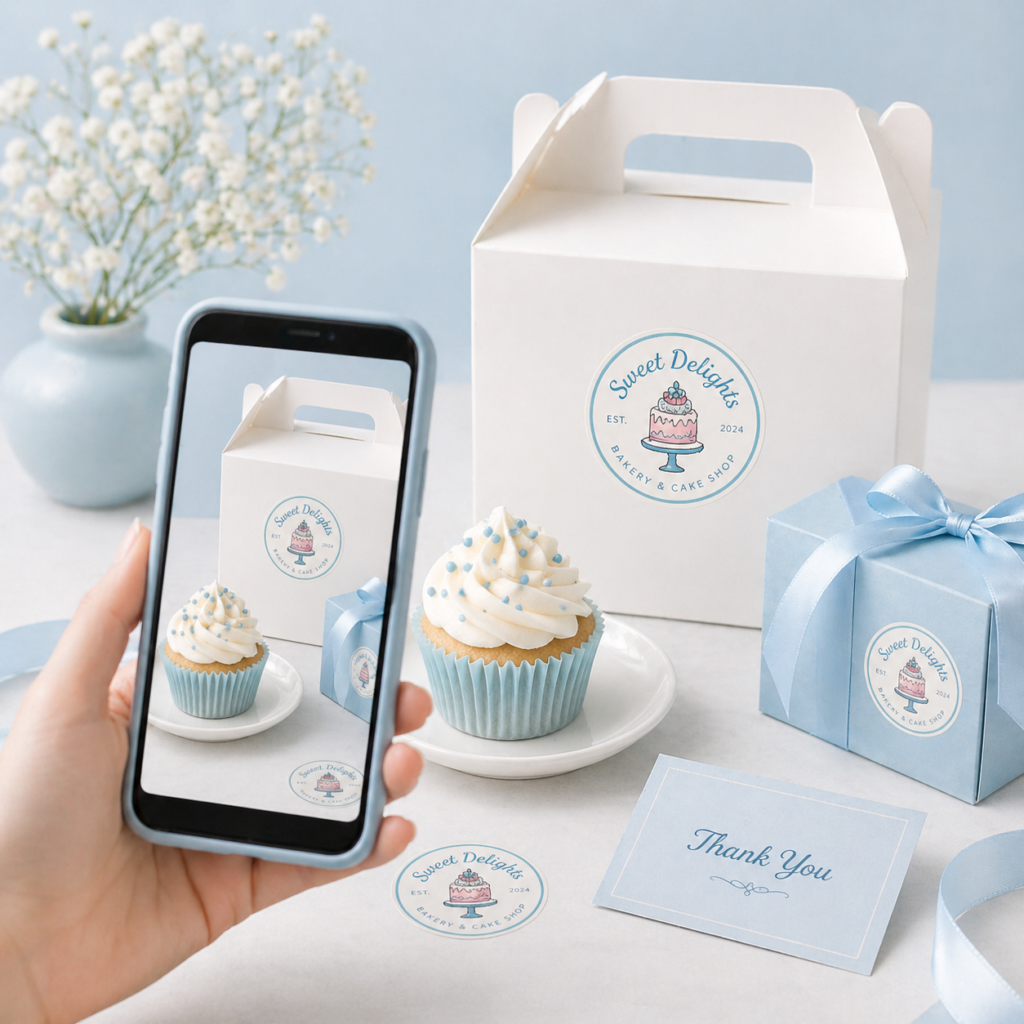
You don’t need a $20,000 packaging budget to look like you have one. You need the right sequence of materials, a disciplined color palette, and a supplier who understands that small bakeries deserve big-brand presentation without big-brand minimums.
At EG Bakery Solution, we specialize in exactly this: premium packaging systems designed for real bakery budgets. From custom stickers and belly bands to complete branded merch collections, we help you build a packaging experience that turns first-time buyers into repeat customers—and repeat customers into brand ambassadors.
About the Author: This guide was written by the packaging strategy team at EG Bakery Solution, based on direct work with 200+ bakery businesses across North America, Europe, and Asia-Pacific. All cost data reflects 2026 market rates for small-to-medium batch production.