
Bread Packaging Ideas for Bakeries: Practical Ways to Pack and Present Your Bread
For a bakery, bread packaging is more than just an outer layer used to hold the product. It shapes the first impression customers have when they see your bread and influences the overall experience throughout display, carrying, and purchase.
Through years of working with bakeries, artisan bread brands, and food businesses, we have found that many customers searching for bread packaging ideas initially focus on one question: “What packaging looks more attractive?” However, truly effective packaging design needs to consider more than appearance. It should also match the characteristics of the bread itself, the brand style, and the way customers interact with the product.
Great bakery bread packaging ideas do not always require complicated designs. A well-designed window, a simple branded sleeve, or a carefully created label can help ordinary packaging become more recognizable while improving product presentation.
In this article, we will explore practical bread packaging ideas for different bakery situations, helping you discover more suitable packaging directions from the perspectives of bread shape, brand details, and product presentation.
1.Idea 1: Let the Bread Become Part of the Packaging Design
When your product already has unique visual qualities, your packaging does not need to rely on heavy graphics or excessive decoration to attract customers. A more effective approach is to let the bread itself become part of the visual experience.
For many artisan bakeries, the handcrafted appearance of bread is an important part of the brand value. Details such as the scoring patterns on handmade sourdough, naturally formed textures, seeded crusts, or the braided shape of brioche can help customers immediately recognize the craftsmanship and quality behind the product.
When developing bread packaging design, you can consider using windows, partial displays, or transparent areas that allow customers to see the actual product before purchase. These window bread packaging ideas are not only about showing the bread itself; they also help customers quickly understand what makes your product special.
For example, a handmade sourdough loaf can use a top or side window to highlight its unique scoring pattern, while a decorative sweet bread can use a partial transparent area to showcase its shape and colors. Compared with adding too many visual elements to the outside of the package, allowing the bread itself to become part of the design can create a more natural and authentic brand experience.
However, display-focused packaging also requires the right balance. The position, size, and coverage of the window should be carefully considered based on your bread characteristics and selling environment. The purpose of the packaging is to highlight the strengths of your product without affecting the overall visual appeal.
For brands looking for practical bakery packaging ideas, making the bread part of the packaging design is a simple but effective approach. It can improve shelf and counter presentation while helping your bread build a clearer visual identity among competing products.
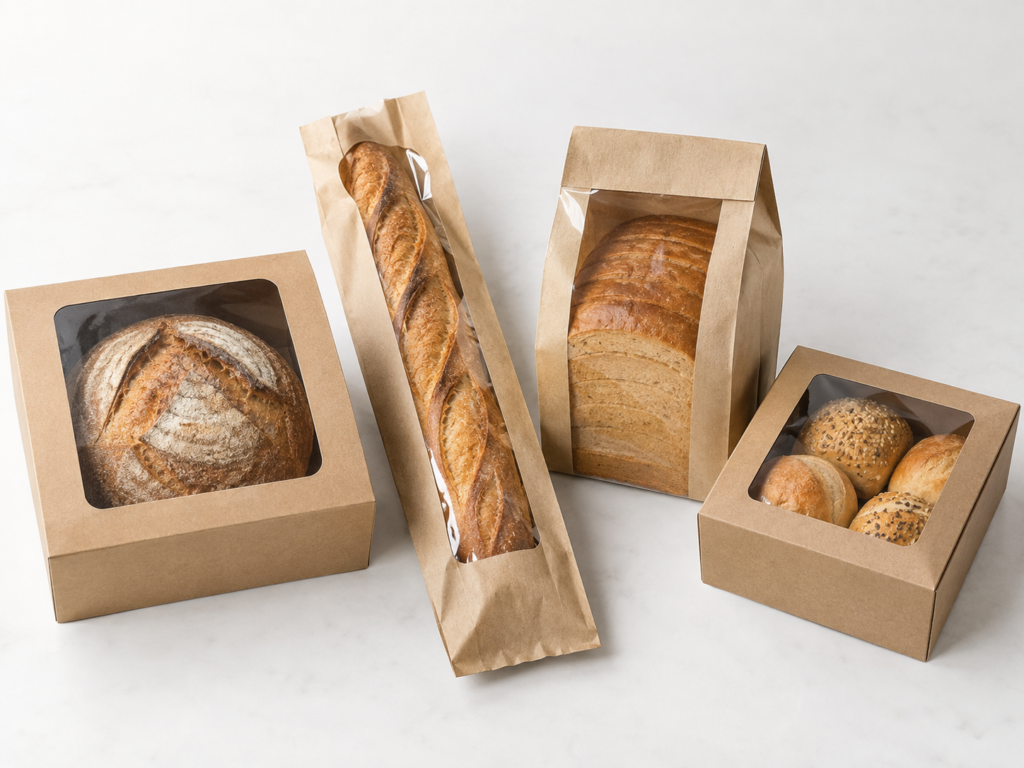
2.Idea 2: Design the Packaging Around the Shape of the Bread
When choosing bread packaging, many brands start by thinking about “what type of box or package they like.” However, different bread shapes have different needs when it comes to presentation, carrying, and protection. A package that works well for a round sourdough loaf may not be suitable for a long baguette, and a structure designed for standard toast may not effectively present a small premium loaf.
Good bread packaging design should create a natural connection between the package and the product. By adjusting the packaging structure based on the shape of the bread, you can improve product presentation while helping customers better recognize the attention and care behind your brand.
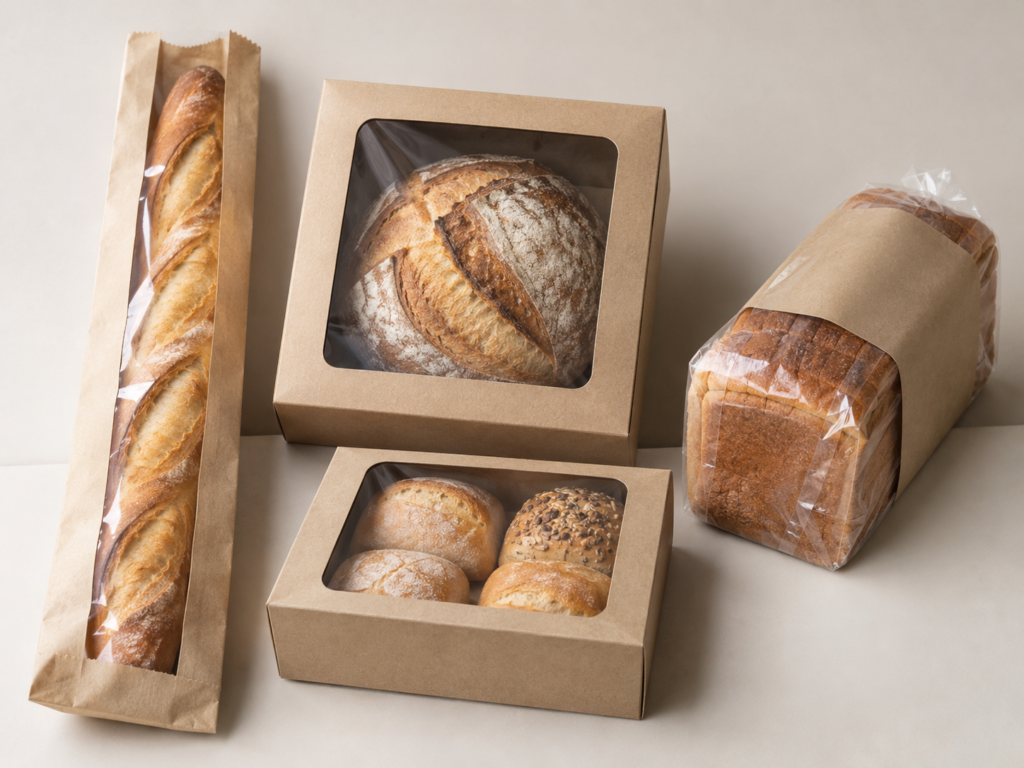
Long Breads: Use Sleeves or Long-Format Packaging
Long bread products, such as baguettes, French bread, and other artisan long loaves, are defined by their unique length and linear shape.
When these products are placed into oversized or overly deep standard packaging, their natural visual characteristics can easily be weakened. Therefore, when developing long bread packaging, consider structures that better match the product proportions, such as long paper sleeves, open-style sleeves, or custom-sized bags.
This approach not only reduces unnecessary space but also creates a more balanced presentation while making the bread easier for customers to carry and handle.
For bakeries that emphasize craftsmanship, long-format packaging also provides valuable space for brand expression. You can add branding elements in the center, at both ends, or around the closure area, allowing the design to naturally follow the length of the bread.
A well-designed long bread package does not need excessive decoration. Instead, it should use the product’s natural proportions to create a simple and recognizable visual experience.
Round Loaves: Echo the Shape With Windows or Wraps
Round loaves, such as artisan sourdough, country loaves, and traditional handmade breads, often have a natural and rustic visual character. Unlike standard toast loaves with straight edges, their unique personality comes from their rounded shape and handcrafted appearance.
When exploring sourdough packaging ideas, you can consider allowing the packaging structure and visual elements to follow this natural shape instead of placing the product into a standard rectangular package.
For example, round windows, curved openings, or wrap-around bands can strengthen the connection between the package and the loaf itself, creating a more balanced presentation. A simple circular label placed on top, a packaging element that surrounds the product, or graphics inspired by the loaf’s shape can help create a more unified visual language.
For artisan bakeries, this approach preserves the natural feeling of handmade bread while making the packaging look more refined and distinctive. Especially when your products highlight traditional techniques, natural ingredients, or handcrafted quality, packaging that follows the product shape can communicate brand value more effectively than complicated decoration.
If your round loaves are displayed for retail or bakery counter sales, carefully designed windows or partial display areas can help customers better appreciate the product while keeping the overall package structure complete and practical.
Rectangular Loaves: Keep the Structure Clean and Easy to Stack
Rectangular bread products, such as sandwich bread, milk bread, toast loaves, and some brioche loaves, usually have stable dimensions and clear edges. The biggest advantage of this regular shape is that it works well with clean and consistent packaging systems.
When designing loaf bread packaging, you can use simple carton structures, sleeves, or well-planned window designs to maintain a consistent presentation across bakery counters, retail shelves, and takeaway situations.
For brands with multiple bread SKUs, regular packaging structures also make it easier to create a unified visual system. For example, you can keep the same package size and structure while using different colors, labels, or product names to distinguish different flavors.
This approach not only helps customers recognize products more easily but also makes it easier to expand your bread collection in the future.
Mini Loaves: Turn Small Size Into Part of the Presentation
Although mini loaves are smaller in size, they provide more opportunities for creative packaging solutions. Instead of simply creating a smaller version of a large bread package, small products often benefit from more thoughtful structures and combination displays.
For example, an individual mini loaf can use a compact window box, small tray, or custom-sized package to create a more refined presentation. Multiple mini loaves can also be arranged into a gift set or sharing package.
For brands selling specialty breads, seasonal products, or bakery gift sets, mini breads are not only a product size option but also an opportunity to create a more memorable buying experience.
Well-designed mini bread packaging can help customers appreciate the small, delicate, and unique qualities of these products while adding more value to the overall presentation.
3.Idea 3: Make Small Brand Details Do More
Not every bakery needs to create a complex custom packaging system from the beginning. Sometimes, a few carefully designed brand details can create a clear and memorable brand expression.
Through our experience with real bread packaging projects, we have found that what truly influences customers’ impressions is not how many design elements are added, but whether these elements are placed in the right positions and whether they match the characteristics of the product.
When developing bakery packaging ideas, you can think of these small details as part of the overall packaging design. The key is to use them to help customers quickly recognize your brand while keeping the package clean and balanced.
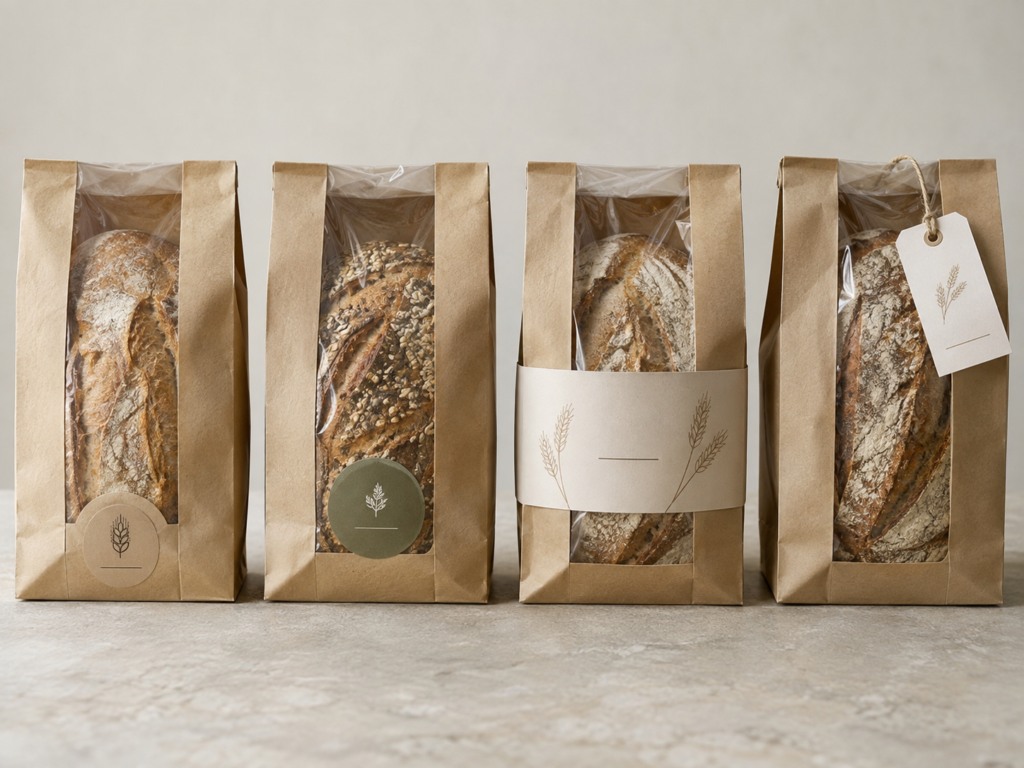
Put the Logo Where Customers Naturally Look First
Your logo does not need to take up the largest area on the package, but it should appear where customers naturally pay attention.
For bread packaging, customers usually notice the front panel, closure area, or product display area first when they pick up a product. These positions are often more valuable than simply making the logo larger.
For example, placing a logo on the folded closure area of a bread bag allows customers to see the brand before opening the package. Positioning the logo near a transparent window allows the brand and product to appear together. For paper boxes, the top or front panel can create a stronger and more consistent brand impression.
If your packaging design follows a simple style, thoughtful logo placement often creates a more premium feeling than repeating the logo across multiple areas.
For custom bakery packaging, the purpose of a logo is not to fill empty space. It is to create a clear brand impression when customers first interact with your product.
Use Labels and Stickers to Add Identity Without Changing the Whole Package
For many growing bakeries, or brands with seasonal products, creating a completely new package every time a product changes is not always practical. In these situations, labels and stickers can become an important connection between the product and the brand.
For example, using the same kraft bread bag.Different flavor labels can help separate sourdough, walnut bread, and olive bread;Seasonal stickers can quickly transform the package into a Christmas bread or limited-edition product;A branded logo sticker can give a simple package a stronger brand identity.
This approach works especially well for bakeries that need flexibility when adjusting their product range.
The purpose is not to make the sticker become the main design element. Instead, it should help customers quickly understand:“What product is this?” “Which bakery does it come from?” “What makes it special?”
Use Bands and Sleeves to Create a Larger Branding Area
If stickers provide a small branding touchpoint, paper bands and sleeves can help you create a more complete packaging visual.
For example, a simple bread box or bag can be upgraded with a custom paper band that displays Logo,Product name,Bread type,Brand message,Seasonal design.
For many bakeries, this is a practical packaging upgrade. You do not always need to change the entire packaging structure. By adding an external visual layer, the same basic package can adapt to different products or sales occasions.
For example, the same bread box can use a regular branded band for daily products, a Christmas-themed sleeve during the holiday season, or a different product information band for a new launch.
This flexible approach is commonly used by growing bakeries when developing bakery packaging design systems.
Add Cards or Tags When You Need More Space to Tell the Story
Bread packaging is not always the best place to include large amounts of information. Especially for artisan bakeries, packaging is often designed to stay clean and simple, allowing the product itself to remain the visual focus.
In these cases, a small card or tag can provide additional space for brand information.
For example, you can include Bakery story,Ingredient information,Serving suggestions,Thank-you messages,Seasonal greetings.
For gift breads, premium products, or brand-focused bakeries, placing all of this information directly on the package may make the design feel crowded. A separate card allows you to keep the packaging clean while still creating a more thoughtful customer experience.
These small details can help customers better understand the story behind the product and create a stronger connection with your bakery brand.
4. Idea 4: Refresh the Packaging Without Starting Over
A mature bakery packaging design system should have enough flexibility to support different products and occasions. Your core packaging can remain consistent, while small visual adjustments allow different flavors, seasonal products, or special campaigns to have their own identity.
This approach not only helps maintain brand consistency but also reduces the time and inventory pressure caused by constantly developing completely new packaging.
Unlike the previous idea, where we focused more on using small packaging additions to enhance the overall look, this section focuses on thoughtful design changes directly applied to the packaging itself.
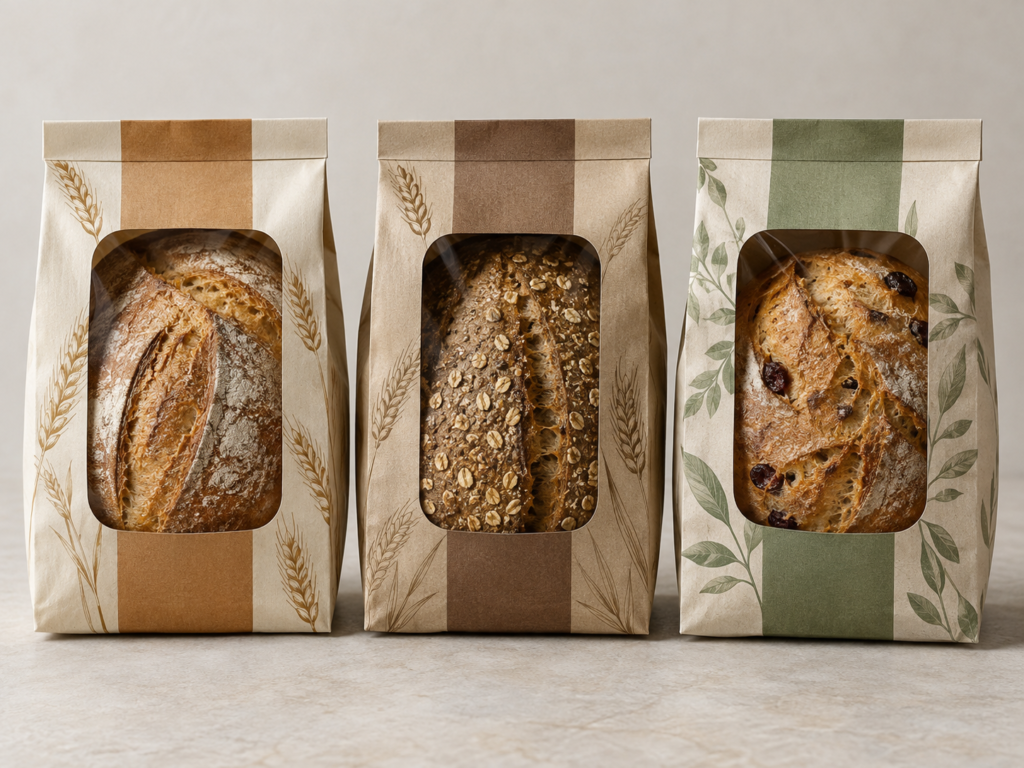
Use Color Changes to Separate Different Bread Varieties
When your bakery offers multiple bread varieties, color is one of the simplest and most effective ways to create product differentiation.
You do not always need a completely different package design for every type of bread. Instead, you can keep the same packaging structure and brand style while using different colors to create clear product categories.
For example,Classic sourdough can use natural beige or brown tones;Whole wheat bread can use green or grain-inspired colors;Sweet bread or brioche can use warmer tones;Seasonal products can use special themed colors.
This approach helps customers quickly identify different products at the bakery counter while keeping the overall brand appearance consistent.
When developing custom bakery packaging, color variations can be applied to Labels,Sleeves,Belly bands,Printed areas.
For bakeries expanding their product range, a stable packaging system combined with flexible color differentiation is often more efficient than constantly creating completely new packaging designs.
Give Seasonal Bread a Temporary New Look
Seasonal bread products usually have a limited selling period, so creating a completely new packaging system is not always necessary. A more practical approach is to keep your existing bread packaging design and make small adjustments to create a seasonal look.
For example, you can Adjust the color theme .Use seasonal colors such as Christmas red and green, warm autumn tones, or other seasonal palettes to quickly change the feeling of the packaging.
Add seasonal graphics. Introduce elements such as snowflakes, leaves, or holiday illustrations while keeping your original brand style instead of completely redesigning the package.
Update product messaging.Use seasonal product names, special labels, or limited-time messages to transform regular packaging into a Holiday Edition.
This approach allows bakeries to launch Christmas bread, holiday loaves, or seasonal products quickly while maintaining a consistent brand identity.
When designing seasonal packaging, it is better not to completely replace your existing brand style. Instead, add new seasonal elements within a familiar visual system, allowing customers to feel the freshness of the occasion while still immediately recognizing your brand.
5.Idea 5: Turn Everyday Bread Into a Gift
Bread is often considered an everyday food, but many bakeries today are exploring ways to turn it into a product with emotional value. Especially during holidays, special occasions, or limited-edition product launches, thoughtful packaging can help transform a simple loaf into a gift that customers are proud to share.
Through better product combinations, a more complete presentation experience, or meaningful brand details, bread packaging can change the way customers perceive the product.
When designing bread gift packaging, you do not always need a complicated gift box structure. The key is creating a packaging experience that makes the product feel more thoughtful and special. Below are some practical ideas to inspire your next bakery packaging project.
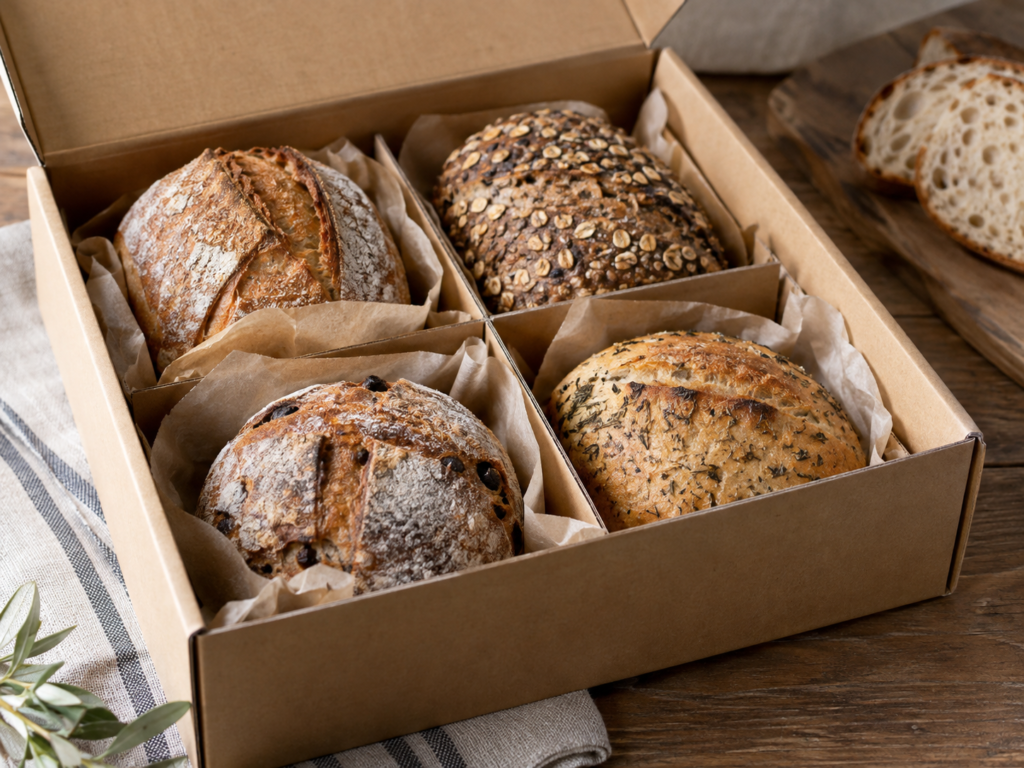
Combine Several Breads Into a Gift Set
For bakeries looking to increase product value, combining multiple breads into a gift set can be an effective packaging approach.
For example, you can create Mixed flavor bread collections;Holiday bread gift sets;Breakfast bread combinations;Bread sets paired with complementary products.
Compared with selling a single loaf, a well-designed combination package can create a more complete product experience.
When developing bakery gift packaging ideas, you can use suitable inserts, dividers, or combination packaging structures to keep different products organized while helping customers feel that the set has been thoughtfully prepared as a gift.
This approach works especially well for Holiday collections;Seasonal bakery products;Premium bread assortments;Corporate gifting.
The goal is not to make the packaging more complicated, but to help multiple products come together as a more valuable and meaningful package.
Create a More Thoughtful Unboxing Experience
When bread is purchased as a gift, packaging needs to do more than protect the product. It also needs to create a better opening experience.
A successful gift package does not necessarily require complicated design. More importantly, it should make customers feel that the product has been carefully prepared and presented.
For example, you can consider how the bread is arranged inside the package,what customers see first when they open it,whether different products are displayed neatly together,and whether the package is easy to carry and share.
For premium bakeries or artisan bread brands, these details can influence how customers perceive the overall value of the product.
Even a simple bread box can create a stronger gifting experience when the product arrangement is clear and the presentation feels intentional.
When developing premium bakery packaging, the goal is not to make the package more complicated. It is to create a more natural, organized, and memorable product presentation.
Add a Personal Message for Holiday or Corporate Gifting
When bread is purchased as a gift, customers are not only buying the product itself. They are also sharing a feeling, a message, or a thoughtful gesture.
A simple brand message, holiday greeting, or thank-you note can help your bakery build a stronger connection with customers and make the packaging become part of the gifting experience.
For example, you can include Holiday greetings for seasonal bread;A short thank-you message for loyal customers;A note about your bakery story or handmade process;A message designed for corporate gifting occasions.
For holiday bread, artisan bakery products, or corporate gift collections, these details help customers understand the value behind the product instead of seeing it as just another food item.
When creating custom bakery packaging, you do not need to add too much information. A simple and meaningful message is often more memorable than a design filled with excessive text.
For example:“Baked fresh for your holiday table.”or“Thank you for supporting our bakery.”
A short message like this can add warmth and personality to the packaging experience.
Great gift packaging does not only make a product look suitable for gifting. It helps customers express the feelings they want to share with others.
6.Before Choosing a Bread Packaging Idea
Before choosing the right bread packaging ideas for your bakery, it is helpful to first look at your product and consider a few practical questions. Good packaging design is not simply about choosing a box or bag that looks attractive. It is about finding a solution that matches your bread characteristics, selling methods, and brand positioning.
First, consider the shape and size of your bread. Long breads, round sourdough loaves, standard loaf breads, and mini breads all have different requirements when it comes to packaging structure and product presentation. The right package should not only protect the bread but also help customers better appreciate the unique qualities of your product.
Second, think about your selling environment. If your bread is mainly sold at a bakery counter, the packaging may need to focus more on visual presentation. If your products are used for takeaway, delivery, or gifting, you may need to pay more attention to carrying convenience and the overall customer experience.
Finally, do not overlook your brand’s long-term development. If your bakery plans to introduce more product lines in the future, choosing a flexible bakery packaging design system can be more practical. A consistent packaging structure combined with different visual elements is often more adaptable than creating a completely new package for every product.
For brands looking for custom bread packaging, the best solution is not always the most complicated design. It is the packaging approach that can balance product requirements, customer experience, and long-term brand growth.
7.Frequently Asked Questions
What packaging information should be included on bread packaging?
The information included on bread packaging should be determined based on your target market and product positioning. In general, you may consider including the product name, brand logo, ingredient information, allergen details, storage instructions, production information, and brand story.
For premium bakeries or artisan bread brands, you can also include a short brand introduction or product highlights to help customers better understand the value behind your products. When designing the package, it is important to plan the information hierarchy carefully and avoid placing too much text on the front panel.A good bread packaging design should maintain visual appeal while ensuring that important information remains clear and easy to read.
How can a bakery avoid ordering too much custom packaging inventory?
For bakeries with multiple products or frequent seasonal changes, it is often more practical to start with a flexible packaging structure and use labels, colors, or small design variations to separate different products instead of creating completely different packages for every item.
At the same time, it is recommended to plan your order quantity based on actual sales performance. Starting with core products and gradually expanding your packaging range can help reduce inventory pressure while allowing your brand to adjust based on market feedback.
What makes artisan bread packaging feel more authentic?
The value of artisan bread often comes from handmade craftsmanship, natural textures, and unique product characteristics. Therefore, the packaging does not need to be overly complicated. Instead, it should create a natural connection with the bread itself.
Natural colors, simple design styles, appropriate product presentation, and packaging structures that highlight the product’s characteristics can all help strengthen the handcrafted feeling.
For artisan bread packaging, the goal is not to make the package look more luxurious. It is to help customers understand the craftsmanship, values, and brand personality behind the product.
How can bread packaging support a bakery brand as the product line grows?
As a bakery expands its product range, packaging needs to balance brand consistency with product differentiation.A flexible packaging system allows you to maintain the same structural and visual foundation while using different colors, labels, graphics, or product information to separate flavors and product lines.
This approach helps customers recognize products more easily and allows bakeries to introduce new products, seasonal collections, or gift sets without creating a completely new packaging system every time.
Should bakeries start with fully custom packaging or flexible packaging options?
The right choice depends on your brand stage, product range, and sales plans.
For new bakeries or brands testing the market, flexible packaging options are often easier to manage in terms of cost and inventory risk. For bakeries with stable sales and a clear brand direction, fully custom packaging can better showcase product characteristics and strengthen brand recognition.
Many growing bakeries take a gradual approach: they first establish a reliable packaging foundation, then add custom structures, printing, and special design elements as their products and brand continue to develop.
Conclusion
Choosing the right bread packaging ideas is not only about making your products look more attractive. The right packaging should also match your bread characteristics, brand identity, and selling occasions.
If you are planning a new bakery packaging design, EVER GREATER can help you develop a packaging solution that fits your products, from structure and visual design to production.
With 25+ years of experience in packaging printing and manufacturing, we have worked with bakeries, restaurants, and online bakery brands to create packaging solutions that balance product presentation, brand value, and practical use.