
Cake Box Size Guide for Better Fit, Safer Delivery & Professional Presentation
Choosing the right cake box size is not always as straightforward as matching a box to a cake diameter. Many bakery owners run into common packaging problems such as cake boards that do not fit, toppers touching the lid, cakes shifting during delivery, or boxes that feel either too tight or unnecessarily oversized.
If you regularly make birthday cakes, custom cakes, Korean-style cakes, wedding cakes, or delivery orders, this guide will help you understand how to choose cake box sizes more effectively. We’ll cover practical sizing considerations, common packaging mistakes, and the box sizes most bakeries rely on for everyday operations.
Quick Cake Box Size Chart
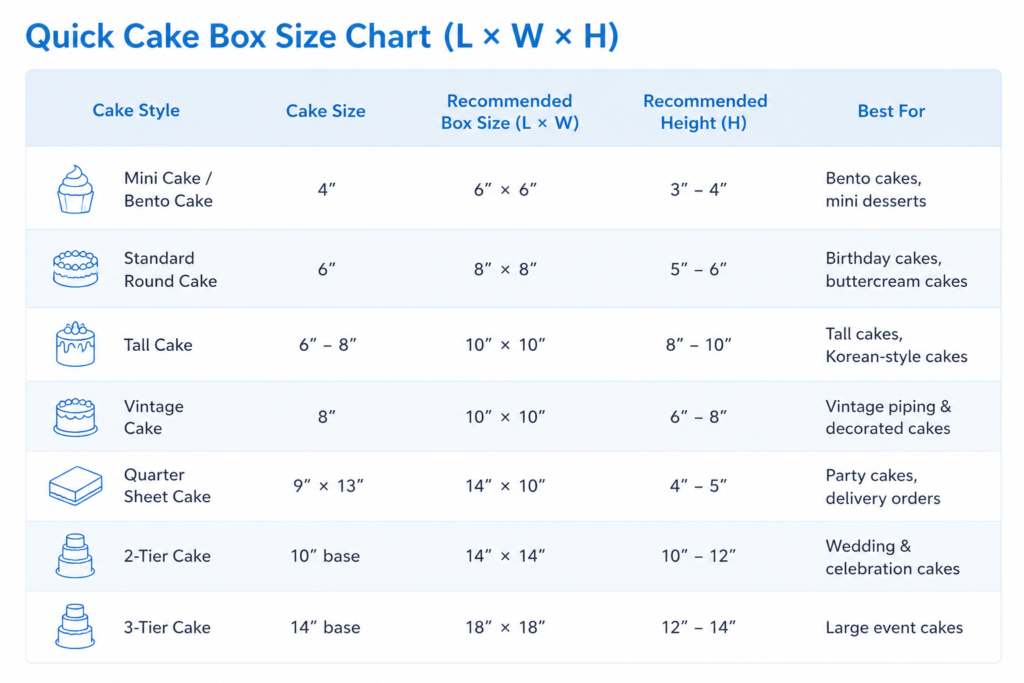
These recommendations are intended as general bakery packaging guidelines. Actual box sizes may vary depending on cake height, cake board thickness, decorations, and delivery requirements.
Tips:For tall cakes or cakes with large toppers, leaving an extra 1–2 inches of height clearance can help prevent frosting damage during transport.
Most Popular Cake Box Sizes for Bakeries
In real bakery operations, cake box sizes are rarely selected based on exact measurements alone. Over time, most bakeries naturally consolidate their packaging into a small group of core sizes that reliably perform across different cake styles, decoration levels, and delivery conditions.
Rather than trying to match every cake with a perfect-fit box, experienced bakery owners tend to rely on a few proven sizes that reduce operational friction and ensure consistent results in daily production.
8" × 8" — The Everyday Bakery Standard
This is one of the most commonly used cake box sizes in small bakeries and home-based cake businesses because it consistently supports standard 6-inch cakes with minimal adjustment.
Its real value is not just dimensional compatibility, but operational reliability. In fast-paced bakery environments, this size helps reduce packing hesitation and minimizes errors during busy production periods.
It provides enough clearance for light decorations and buttercream finishes while still maintaining stability for pickup orders and short-distance deliveries.
However, it is less suitable for taller cakes or designs with extended decorative elements, where additional height clearance becomes necessary.
10" × 10" — The Modern All-Rounder
As cake designs have evolved toward taller structures and more decorative styling, the 10″ × 10″ box has become a key operational standard for many modern bakeries.
It is widely used for tall buttercream cakes, Korean-style minimalist cakes, vintage piping cakes, and custom cakes with toppers or side decorations.
Its main advantage is flexibility. Instead of maintaining multiple highly specific box sizes for different cake variations, many bakeries rely on this size as a “default solution” for a wide range of custom orders.
In some cases, it may feel slightly oversized for very simple cakes, but many bakery owners still prefer it because the added flexibility reduces packing errors and improves consistency during high-volume order days.
12" × 12" — For High-Value and Event Cakes
This size is typically reserved for larger celebration cakes, wedding cakes, and floral or multi-layer designs that require more structural space and wider presentation boards.
It plays an important role in handling premium and event-based orders where both stability and presentation space are critical.
Because of its larger footprint, it is not commonly used for daily production. Instead, bakeries treat it as part of an “event packaging range,” used selectively during peak seasons, wedding orders, or high-end custom cake projects.
What Experienced Bakeries Actually Do
In practice, most bakeries gradually simplify their packaging system rather than expanding it.
Instead of stocking a large number of narrowly defined sizes, they focus on a small set of core dimensions that cover the majority of real orders.
This approach is not about limiting options, but about improving efficiency, reducing packaging complexity, and ensuring more consistent results across different cake styles and delivery conditions. For most bakery businesses, a simplified packaging system leads to fewer mistakes, smoother operations, and more predictable outcomes in day-to-day production.
Common Packaging Problems Bakeries Face
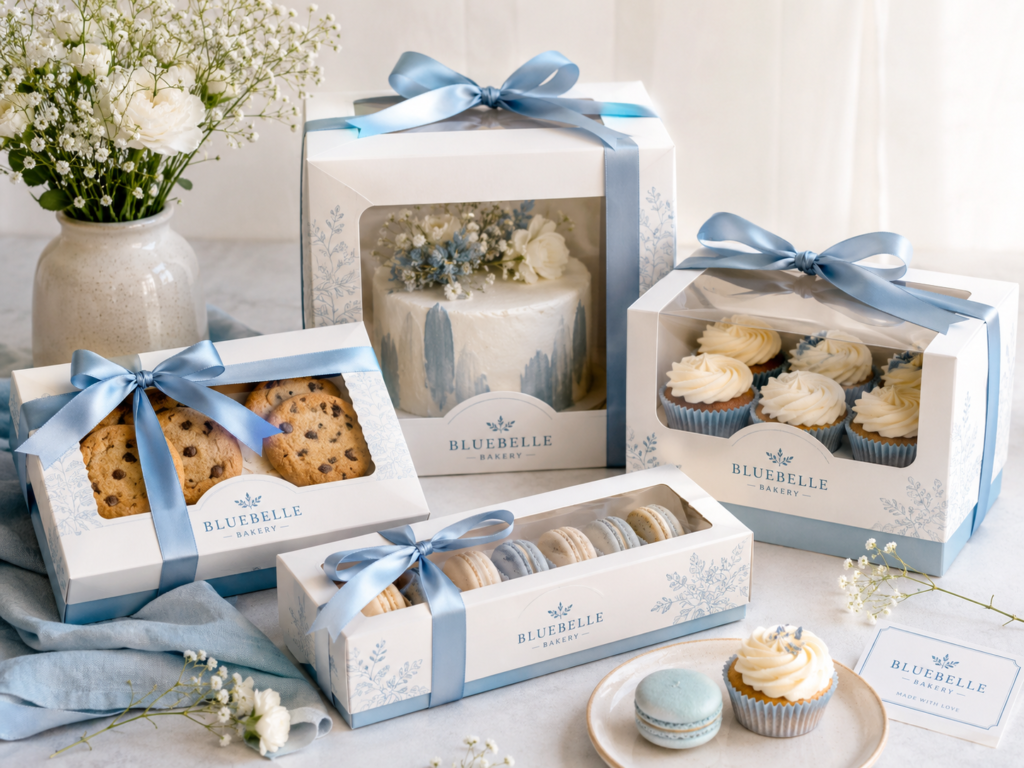
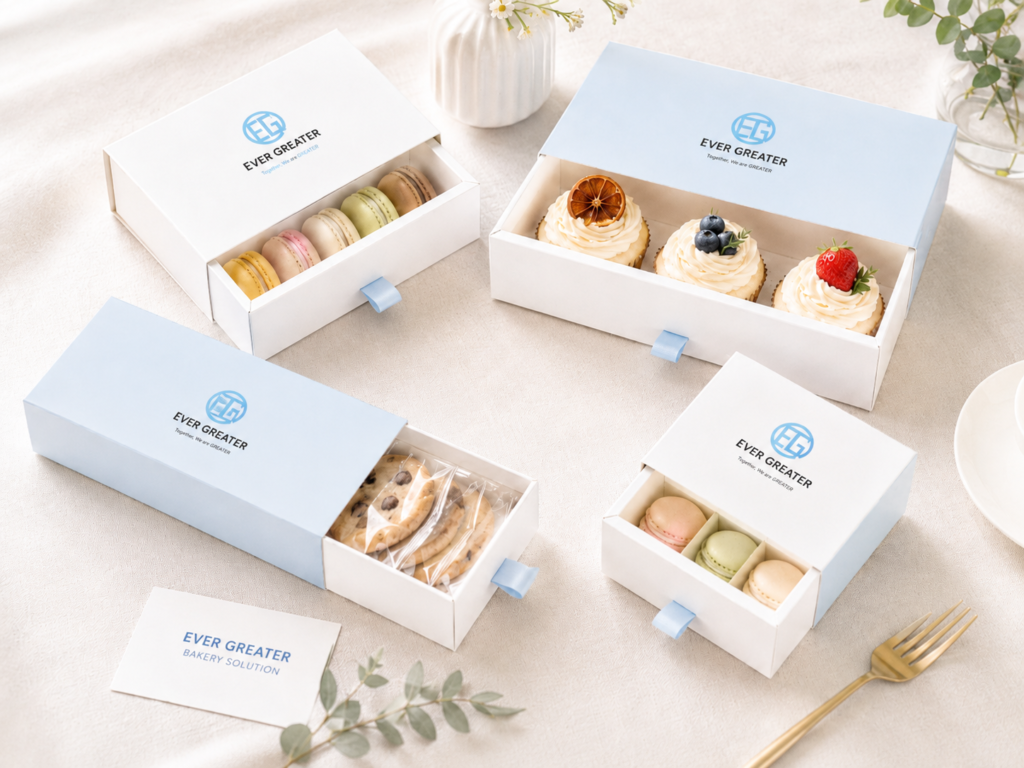
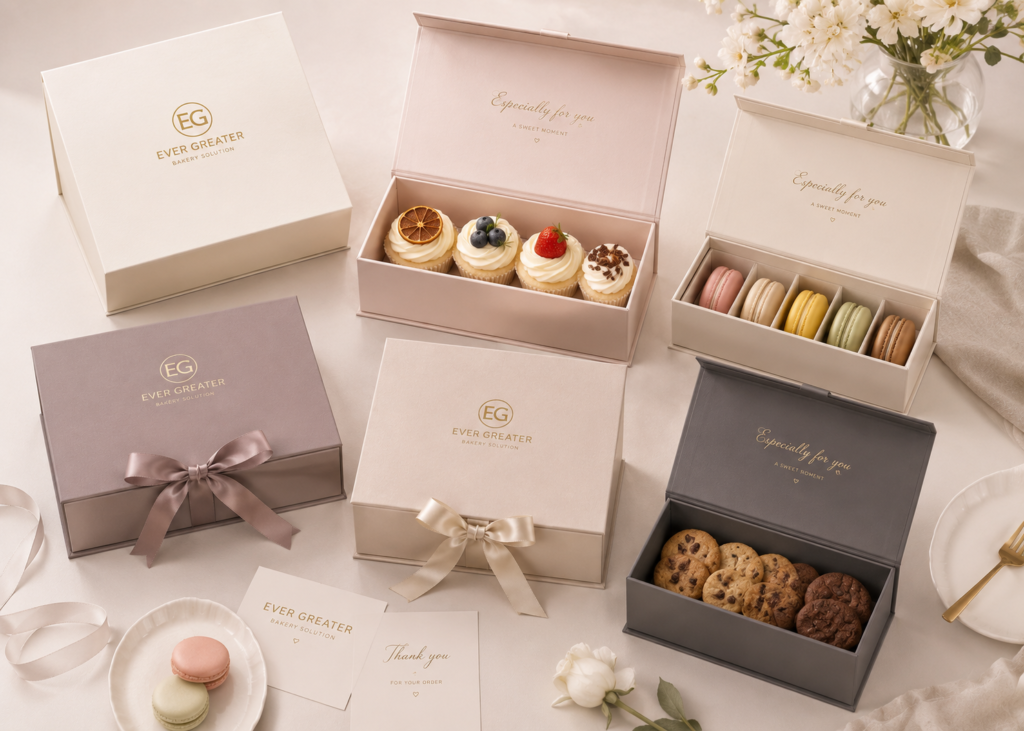
Even with the right cake size chart, small packaging mistakes can still cause delivery or presentation problems. Here are a few of the most common sizing issues bakeries run into.
Choosing a Box That’s Too Tight
Tight boxes can damage buttercream edges, crush decorations, and make cakes harder to handle safely during packing or pickup.
Ignoring Cake Height
Tall cakes and cakes with toppers often need more vertical space than expected. Low box lids can easily damage piping or decorations during transport.
Forgetting the Cake Board
Many cakes fit inside the box, but the cake board does not. Thicker drum boards and oversized presentation boards usually require additional space.
Using Weak Packaging for Heavy Cakes
Heavier cakes can bend weaker boxes or become unstable during delivery, especially with tiered cakes or dense fillings.
Choosing Oversized Boxes for Delivery
Too much empty space allows cakes to slide during transport. A properly fitted box should balance clearance and stability.
Cake Box Size Also Affects Presentation
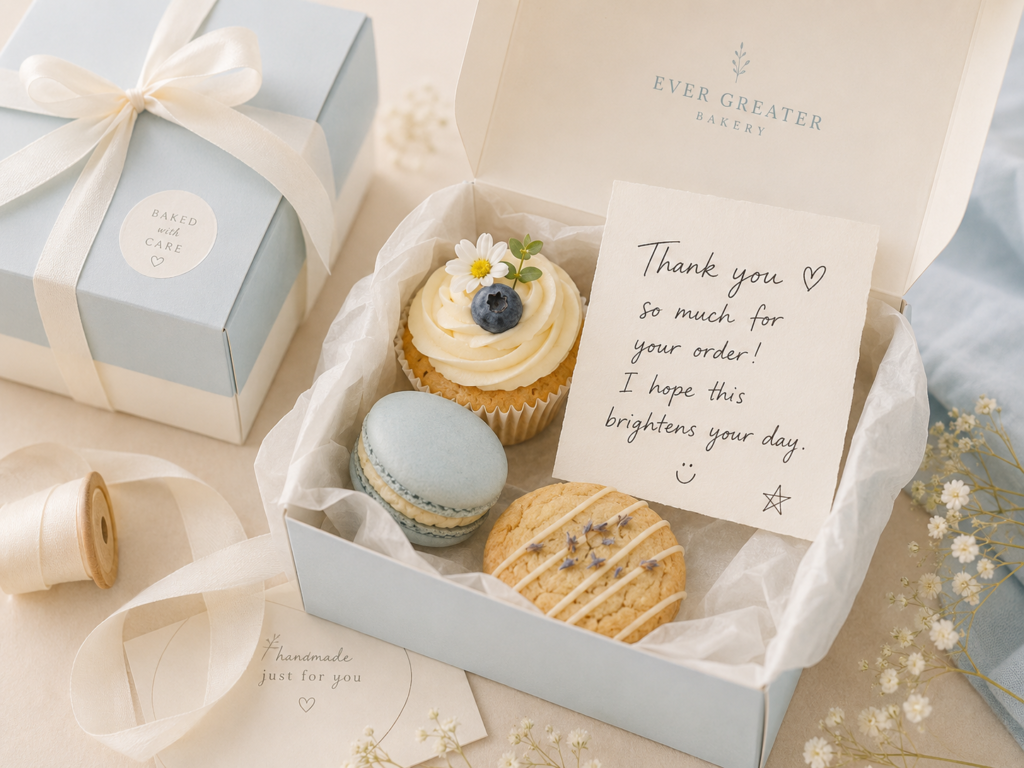
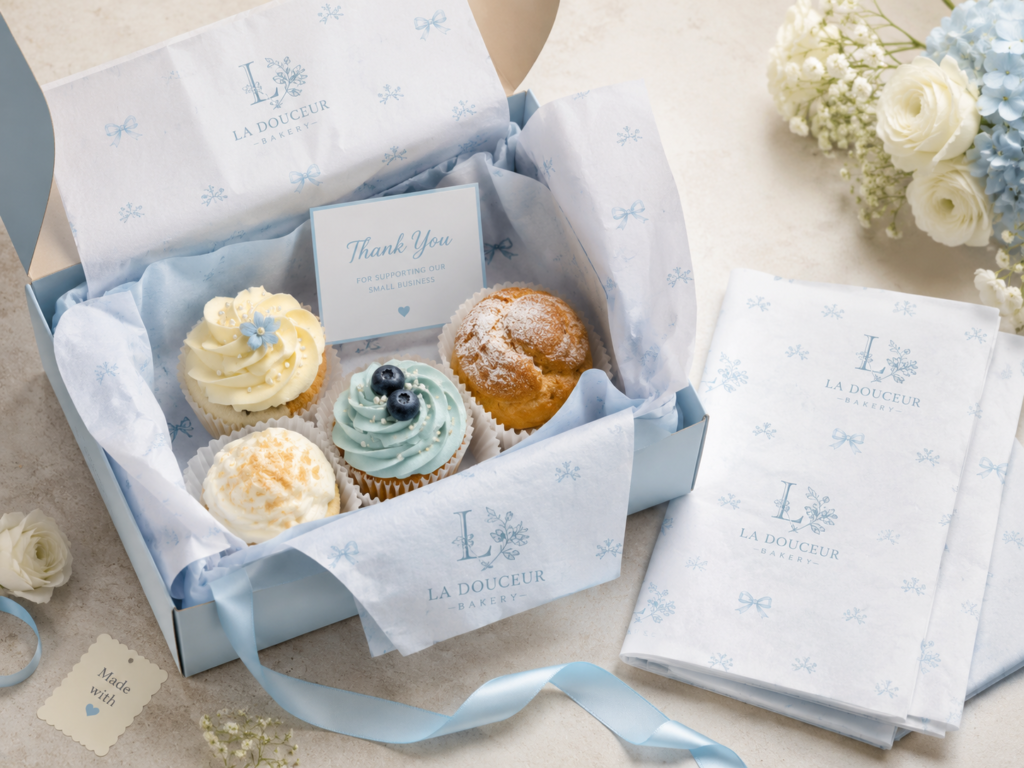
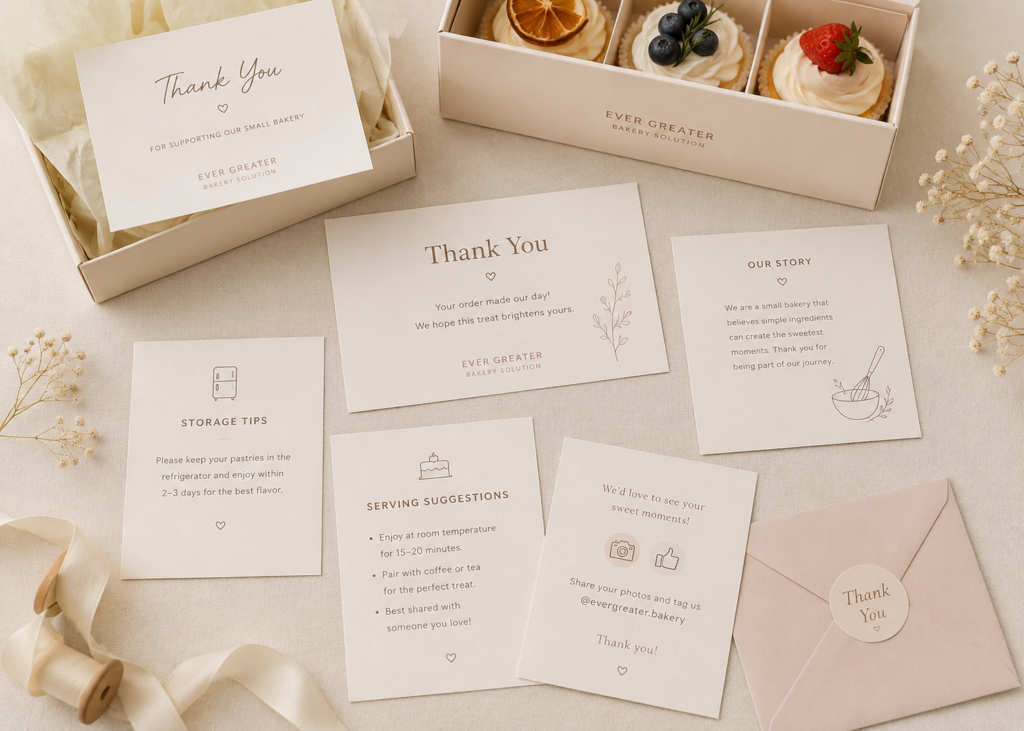
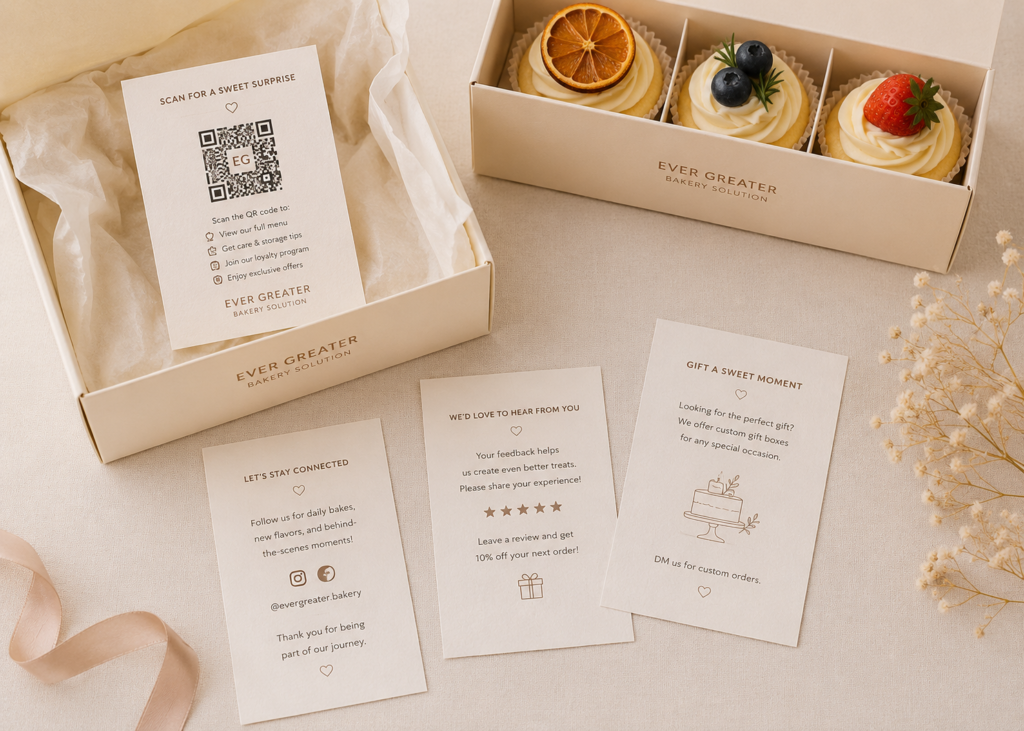
The right cake box size does more than protect the cake during transport — it also affects how the final product looks when customers receive and open it.
Many modern bakeries, especially Instagram-focused cake businesses, now prefer cleaner packaging styles with better product visibility and a more polished presentation. Window cake boxes, neutral color packaging, and minimalist designs are especially popular for birthday cakes, Korean-style cakes, and custom celebration cakes because they help the cake remain the visual focus.
For many customers, the packaging becomes part of the overall experience — especially for gifting, celebrations, and social media photos. Choosing a cake box size that fits the cake properly while still maintaining a clean presentation can make the final product feel more professional and memorable.
How to Choose the Right Cake Box Size
Many bakeries tend to choose cake boxes based on cake diameter alone. However, in real-world bakery operations, packaging size is influenced by far more than just the cake itself. Cake height, cake board dimensions, decoration structure, and delivery conditions all play a role in determining the most suitable box size.
Understanding these factors in a practical way helps bakeries reduce fitting issues, improve consistency, and avoid common packaging problems during both preparation and delivery.
Measure the Cake Board First
One of the most common reasons cakes do not fit properly into a box is not the cake size itself, but the cake board being overlooked.
When using drum boards or thicker presentation boards, the actual footprint can be significantly larger than the cake alone. If packaging is selected based only on cake diameter, it can easily result in tight edges, difficulty closing the box, or instability during transport.
Compared with standard boards, drum boards are generally thicker and heavier, and are more commonly used for wedding cakes, tiered cakes, and long-distance delivery orders where additional structural support is required. For this reason, the cake board should always be measured as part of the packaging decision, not treated as an afterthought.
Consider Cake Height & Decorations
Modern cake styles have significantly changed packaging requirements. Designs such as tall buttercream cakes, vintage piping cakes, floral cakes, and celebration cakes with toppers often require much more vertical space than traditional cakes.
These cakes typically feature higher frosting layers, extended decorative elements, or taller toppers, all of which increase the overall packaging height requirement. If the box height is insufficient, it can lead to frosting contact with the lid, damaged piping, or toppers being compressed during transport.
For tall or highly decorated cakes, it is generally recommended to allow 1–2 inches of additional height clearance to ensure safer handling and better protection throughout delivery.
Think About Delivery & Transport
Packaging that works for in-store pickup does not always perform well under delivery conditions.
In many bakery operations, packaging decisions are often based on whether the cake “fits inside the box,” but transport stability introduces additional challenges. A box that is too tight can damage frosting and decorations, while a box that is too loose allows movement that increases the risk of shifting during delivery.
For delivery orders, especially tall cakes, tiered cakes, or long-distance transport, a more stable packaging structure with balanced internal clearance is usually the safer choice. The goal is to maintain both protection and stability during movement, rather than focusing only on fit.
Different Cakes Need Different Packaging
Different cake styles naturally require different packaging considerations.
Standard birthday cakes are usually compatible with conventional box heights, while wedding cakes, tiered cakes, and large celebration cakes often require stronger structural support and more vertical clearance.
At the same time, newer styles such as Korean-style cakes and vintage cakes often feature taller piping, more detailed decoration, or extended toppers. This makes packaging selection more dependent on overall design structure rather than cake diameter alone.
For bakeries that regularly produce custom cakes, it is often more practical to choose packaging based on cake style and structure rather than relying solely on standardized size charts. This approach helps ensure better consistency between cake design, packaging fit, and final presentation.
Frequently Asked Questions
Should I decide cake sizes first or choose packaging first?
In real bakery operations, many businesses actually start by standardizing a small range of packaging sizes first, then align their cake designs around those dimensions. This approach helps avoid last-minute fitting issues and keeps production more efficient, especially during peak order periods.
Do I need separate packaging systems for different cake styles?
Not necessarily. Most small and medium bakeries operate more efficiently by using a limited set of versatile packaging sizes that can work across multiple cake styles. This reduces operational complexity and makes day-to-day order fulfillment much more consistent.
What should I do if a customer changes the cake design after confirming the order?
It depends on the level of change. Minor adjustments in decoration usually do not require a packaging change. However, if the overall structure or visual composition of the cake changes significantly, experienced bakeries typically reassess the packaging choice rather than forcing the original box to fit.
How do bakeries avoid packaging confusion during busy or peak seasons?
Many bakeries simplify their packaging workflow ahead of peak periods by defining a small set of standard go-to packaging sizes. This reduces decision-making time during production and helps prevent errors when order volume is high.
Is it necessary to stock a unique box size for every cake design?
For most growing bakery businesses, this is not practical. A more efficient approach is to maintain a core range of high-usage packaging sizes that can cover the majority of orders, while reserving specialized packaging for premium or highly customized cakes.
When storage space is limited, which packaging sizes should be prioritized?
In practice, bakeries tend to prioritize packaging sizes that are used most frequently and can handle multiple cake variations. The goal is not to cover every possible case, but to maximize usability and efficiency within limited storage capacity.
How can I tell if my packaging system has become too complex?
A clear sign is when packaging decisions start slowing down daily workflow. If staff frequently hesitate, double-check sizes, or face uncertainty during packing, it usually indicates that the packaging system is too fragmented and should be simplified.
Conclusion
Choosing the right cake box size is not about finding a different box for every cake. For most bakeries, the goal is to build a simple packaging system that works consistently across different cake styles, decoration levels, and delivery situations.
In our experience working with bakeries, dessert shops, restaurants, and creator brands, the businesses that achieve the most consistent results are often the ones that simplify their packaging choices rather than constantly expanding them.
With over 25 years of packaging manufacturing and printing experience, EVER GREATER has helped countless bakeries develop practical packaging solutions for custom cakes, delivery orders, and everyday operations. If you’re looking to improve packaging efficiency, presentation, or delivery performance, building the right packaging system is often the best place to start.